





STOP REFINING A FAILING STRATEGY – ARCHITECT A RESILIENT ONE.
FROM LINEAR PLANNING ➔ ADAPTIVE ARCHITECTURE
With Red Direction Growth Framework Reset Consultation, audit the strategic foundation via the structural stress-testing to eliminate obsolescence guaranteed by a 10x increase in modal resilience.
Starting the conversation:
Your routines can actually be stifling your company’s growth. During her visit to the BOLD Business Podcast, Dr. Jennifer Berry, CEO at SmartLab, shares that a simple, rebellious mindset shift can disrupt burnout and drive fresh ideas in today’s fast-changing business landscape.
Lasting impact comes from collaborating and leaning with others, not going it alone. There is power in supportive environments and that is THE place to place effort inside your company. Fostering collaboration results in building a sense of belonging and facing discomfort of day-to-day challenges together.
In this episode, you will hear how celebrating effort propels what you care about now and positively impacts your three-year goal; Dr Berry’s Stop, Walk, and Think process and how to do it; and that even though things change quickly, overall change takes longer. Jess Dewell talks with Dr. Jennifer Berry, CEO at SmartLab, about being BOLD and redefining success to include joy and productive struggle for lasting growth.
Host: Jess Dewell
Guest: Dr. Jennifer Berry
What You Will Hear:
06:00 The shift in identity and value can be difficult to navigate.
- Changes at work caused her to question her self-worth and routine.
- Experiencing a loss of status or recognition impacts both personal and professional life.
- Observing a loved one face hardship can teach resilience and the importance of self-acceptance.
14:55 Foundational learning thrives in hands-on, project-based environments.
- Young people naturally learn through play and active engagement, not lectures.
- Encouraging movement and collaboration restores an innate curiosity and problem-solving mindset.
- Real growth comes from trial, error, teamwork, and learning from failure together.
21:20 Defining and measuring growth is an ongoing, adaptive process.
- Growth objectives and definitions should adapt to the needs and context of each year.
- KPIs provide structure but must be flexible to reflect shifting goals and realities.
- The process of reaching goals is as important as the benchmarks themselves.
29:20 Creating space for reflection and presence changes how we work.
- Intentionally bookending work sessions with movement increases clarity and focus.
- Reflection can be simple, like a walk, but it’s essential for maintaining perspective.
- Transition rituals help separate different types of work and reduce distraction.
30:40 Tiny acts of rebellion and pattern breaks fuel innovation.
- Changing daily routines sparks new ideas and breaks mental ruts.
- Even micro-changes, like taking a different route or switching hands, sharpen awareness.
- Innovation often arises from deliberately interrupting familiar habits.
35:55 Cultivating joy on purpose sustains organizations in tough times.
- Joy is not forced positivity — it’s seeking meaning and fulfillment in everyday moments.
- Finding micro-moments of joy helps individuals and teams navigate uncertainty.
- Maintaining a “joyful vibration” strengthens resilience amidst challenges and change.
43:15 It is BOLD to intentionally design environments where both your internal team and your clients are expected to struggle productively with challenges.
Resources
Transcript
Dr. Jennifer Berry 00:00
The next generation is so important to have this mindset, especially in the AI-powered world. We want them to lead in this AI-powered world, not be led by it.
Announcer 00:14
Every leader needs a trusted partner for the moments that matter. This Bold Business Podcast conversation is that partnership. Your go-to resource designed to break the inertia and refresh your perspective so you can start making moves. Here is your host, an insightful truth teller who serves as the catalyst for getting the right work done and who asks the questions that truly matter. Jess Dewell.
Jess Dewell 00:41
Productive struggle is an interesting concept, especially when we think about it in leadership. The way it has always been is the higher we are in leadership, the more ambiguity we have. And of course, we’re the ones that are supposed to have all the answers. And while the buck does stop with us for accountability, what it doesn’t do is mean we have to have all the answers. There is a concept out there that is becoming more and more prevalent that when we can embrace and the earlier we can embrace it, the more our teams benefit. Dr. Jennifer Berry, she’s the CEO at Smart Lab, stopped by the Bold Business Podcast. And you’re going to hear our conversation in just a second. What I took away from her was something that I’ve been hearing and hadn’t heard articulated quite this way before, right? The sense. And this sense, this business instinct that I’m bringing to you through the Bold Business Podcast is that when we are given the answers, we become productive because somebody else told us what to do. So in somebody else’s eyes, we are productive. Here’s the thing, creativity, innovation, problem solving, adapting, flexibility, all the things we need for a fast changing market, which is every day right now, for a quickly changing market that might also be in disruption, if not today, most likely tomorrow for all of us, being able to be with disconnect, struggle, confusion, uncertainty at every level of our organization is what will create the competitive advantage for us to go forward to make tomorrow possible through our actions today. One of the things I can tell you about collaboration in education, in industry, and in community ecosystems is what Dr. Jennifer Berry, the CEO at Smart Lab, does with her transformational leadership. The role that she is playing and the group that she is guiding and navigating today’s world within the business sector is all about learning and creating opportunities for tomorrow’s workforce. Because we need systemic change that matters not only for our funders, not only for our communities, but for those who are coming up and that will be part of our partners, funders, and communities actively and productively in the future. That is something that I think really lends itself to know about her as we’re having this conversation because as you’re listening, there are three things I want you to be listening for along the conversation. Celebrating effort is what propels the things we care about forward and it creates positive impact on those three-year goals. And number two, Dr. Berry shares a new concept. Stop, walk, and think with us, the process and how to do it. And the third thing is that with quick change, what she and I both notice is that change is still taking time and in some ways taking more time than ever before. So tune in, listen in, and let’s talk about redefining success to include not only joy in our leadership, also productive struggle for our company’s lasting growth. Change is important and we’re in a place where there’s a lot of change. And it’s interesting to recognize maybe the way that we learn also has bottlenecks which impact change and lasting change and growth, just like learning.
Dr. Jennifer Berry 04:24
Change is the one constant. My mother, who just turned 80, by the way, she said something to me my whole life, and she even says this now. She’s the one thing I’m sure of is that I don’t know anything. I think that’s so powerful because she has this change mentality. Things change. You grow, you develop, you learn something new, you meet somebody new that teaches you something different. You surround yourself in environments that change the way you think. So this concept of change, I think, is really powerful. We obviously at Smart Lab work with students and really help them get a mindset that can handle change, that can absorb change, that can be able to navigate through change. But as a leader, I think about that too. How do I navigate through change? How has that served me or hindered me in my career? And then as a parent, thinking about how do I set my daughter up for this ever-changing environment? And I would offer that it might be changing, but I’d be changing at more of a rapid pace than ever before because of AI technology, because of social media, because of people can get information much quicker. Young people, older people can get information much quicker. So you wonder if change is happening in a more rapid pace. So really, just being conscious and thinking about how do we navigate through change, I just think is really important in all settings. I have a question about your awesome mom.
Jess Dewell 05:45
From the outside looking in at somebody who has set the stage for you and helped you navigate all of these things, did you ever see her as a hit, some sort of a selfgrowth plateau that she got stuck in and then figured out how to get through? It’s funny because I think about even me as a parent now,
Dr. Jennifer Berry 06:02
Our children see us on a pedestal because we are the ones training them and developing them and cradling them and caring for them and we’re their stage zone. Oh, we’re just humans trying to figure it out. There’s no playbook to be a parent. And I remember that moment when I was young. I was probably around 19. I’d left for college. I had this moment of, oh, this is because things were getting hard. I had to wake myself up to go a clutter. I said to make sure I got to the student union before everything closed so that I could eat. Those kind of things that I took for granted that my mom was reminding me, make sure you get to the student union before it closes when I was home. Now I was on my own. I had this moment of, oh, this is hard. I remember writing her this letter of basically apology, apologizing for torturing her, apologizing for antics that I played when I was in high school. And she sent me this beautiful note back about how she was just figuring it out. She didn’t have the answers. And sometimes she felt like she gave me too many answers or told me too many times to remind me to eat or just when to go to class or whatever. And that realization of, oh, she’s just a human trying to figure out how to be the best version of herself so she could be the best version for me as a child. That was a turning point for me. I just remember sitting in my dorm room going, oh, my mom is just figuring out. And she feels like she maybe didn’t do enough or did too much or whatever the circumstances. So that was one moment. And then I also remember my mother was a flight attendant and she was passionate about travel. She was a flight attendant in the late 60s. She started in the late 60s. So she was in the era of flight attendants who you had to look a certain way. You had to carry yourself a certain way. She worked for TWA, which is this Trans World Airlines, which carried the Pope and all of the Beatles and all the famous people because it was an international airline. And I remember when TVA got bought by American, there were strikes and there was the owner gave these TVA women who had all these seniority pay cuts. And there was a lot of just turmoil in my mother’s life. And so I had seen her up to that point of just always looking fabulous, acting with this polish air. She always smelled a certain way, nails perfectly polished, hair perfectly clothed. And then that shift when she realized that her value was maybe taken down a notch, her seniority was taken down, her pay was taken down. Yeah. And so I remember that shift for my mom where the hair wasn’t as clothed anymore, or she maybe would be a little bit more fumbly with packing her bag wasn’t as organized. I remember this. I was young. I was probably 12, 13. And I remember those moments of, wow, what is going on here? What is this shift? And as a young person, you don’t really know what a shift is. And it was a tear. She was crying in her room more. She had her identity had been taken from her a little bit. This idea that she had worked so hard and was so valued in this one organization. And now she’s in a new organization, which took down her value notch a little bit, she had a bit of an identity crisis. And so I watched this and I remember years later going, oh, that shift was her going through a bump, a hardship. And then seeing her come out of that on the other side of, oh, I don’t need to be the yes person all the time. Maybe I don’t need to worry about painting my nails every single week. I know this sounds so trivial, but for her, there was a huge shift in her life. And so to witness her polish, just hardship to then here’s the person I want to be. I want to be a little bit of that polish, but also I want to be comfortable in my own skin and I want to see my own value internally versus externally, I think was a really good moment for me as a young woman and to witness her go through that journey, I think was really powerful for me. And I know in my life now, when I go through bumps, I know there’s another side. I know that I can get through this. I have to feel what I’m going through. I have to allow what I’m going through to be real. And I find myself even talking to my daughter about that a lot, about what it means to get to the other side of something, but also lean into what you’re feeling in the moment.
Jess Dewell 10:27
And you know what? I don’t think any of that is trivial because we all have our own identity. We all have a way that makes us feel good. And we know we’re at our best in the world. It might feel trivial from somebody on the outside, but being that person and having that, whatever those are, mine is tea in the morning. I know it’s not about how I look as much, but it’s about this cornerstone of the way that I am. And if there are more than two or three days in a week where I don’t have a chance to have a cup of tea before I start my day, I am not as grounded. I can’t be as much. And it’s not even a really big, it’s just, how do I be my best self in the day? So I can, I can relate, even though having been through those things too, I can relate on just an everyday mundane in quotes level because it’s not mundane.
Dr. Jennifer Berry 11:14
It means something. I grew up as a dancer. I became a professional dancer at a very young age. And then I transitioned into the business world later. And now I’m a CEO of a company and I’m a CEO of a STEM company, nonetheless, where I started as in the performing arts world. My dad’s a professional actor. He runs a theater. So we’re very much artsy. And yet I run a STEM company, like a science, technology, engineering, and math organization. And it seems like a very different sort of way to think or to operate in the world or to view the world. But the reality is it’s very similar because STEM, and we actually coined it at Smart Lab as STEM identity. STEM identity is this way in which a mindset, the way in which you think. And that is dealing with change, as we were just talking about, how to deal with change. That is how to deal with challenges, potentially failures not doing things right the first time or doing things really well and then an external force comes in like i mentioned with my mom’s acquisition from our company and then now your whole world is upside down so we’ve coined this stem identity is i belong i add value i can master rigorous challenges and i think about that in my own life and when you talked about tea i have to have dance in my life multiple times a day whether it’s just in the kitchen dancing with my daughter or I go take a class because I need it. And I can tell if there’s a week or two that goes by and I’m not in a ballet class or not in a jazz class, the way I’m sleeping, the way I’m interacting with my family, the way I show up at work, the decisions I’m making are just not as rich, not as pure. I could feel it. I can feel it in my gut. So this idea of you taking a tea into you’re saying it’s the mundane thing. For me, it’s moving my body. I have to move my body to be a full person and to make the kind of choices in my life that serve me and others.
Jess Dewell 13:12
I think that’s a really important thing to call out, Jennifer, in the sense that it’s actually a non-negotiable. I will tell you what, when that is in my life, discomfort is still uncomfortable. Oh, but everything’s typical. There’s nothing too out of the ordinary. You automatically get these bumpers that we can work within. I’m thinking about discomfort here, and I appreciate you sharing the STEM identity and what that means. Because there is a difference between healthy, productive discomfort and the mindsets or the things that get in the way. How do you first identify with somebody? And it could be in learning or an organization. We can go either direction here. I guess it’s all learning, really. is where do you see the opportunity for that immediate reset in the moment to get back to neutral to then healthy and productive?
Dr. Jennifer Berry 14:04
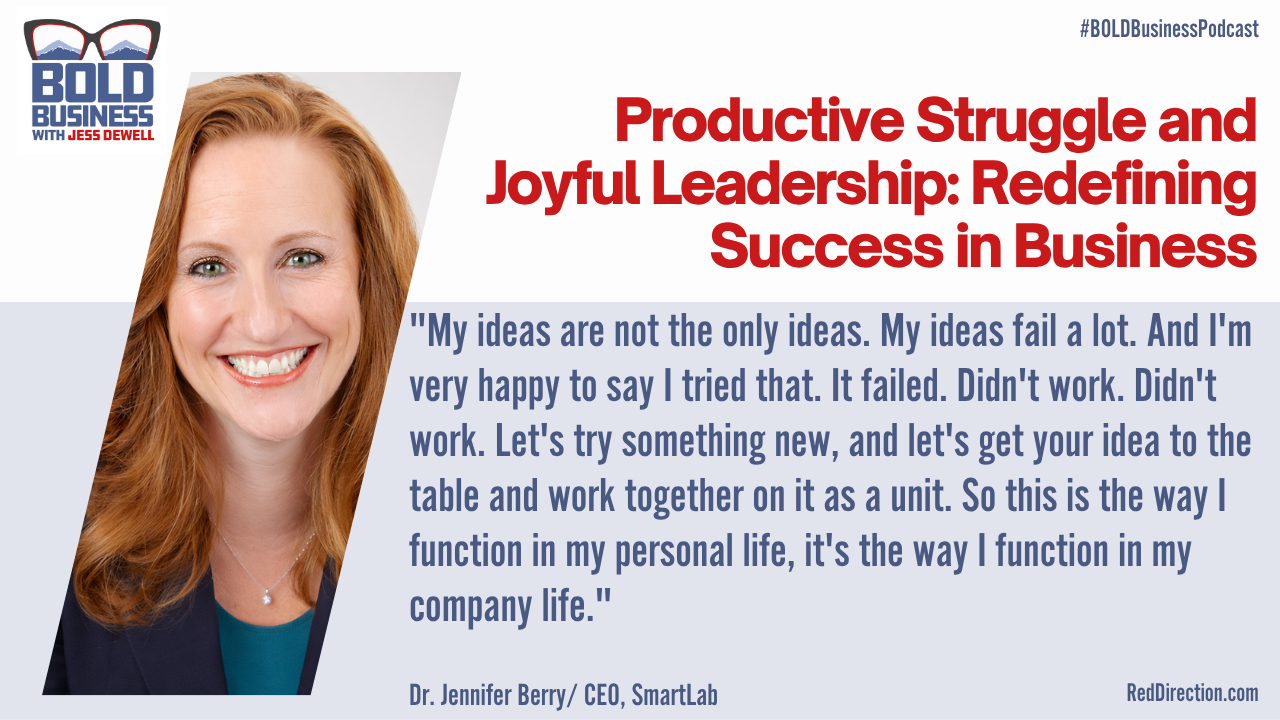
I can tell you, for me, it’s moving my body, like getting up and moving. And I can also tell you in my organization that working together on a problem, cleaning on a problem is how we push through something. So we try something, it doesn’t work or I’m trying something by myself it doesn’t work what’s happening okay let me bring in others let me bring in others and let’s brainstorm let’s problem solve together let’s create a roadmap that we can pick apart book holes in together as a unit so that collaborative in our learning environments that’s what we’re teaching when we say stem identity and we define it as you belong you add value and you master rigorous challenges okay how do I feel like I belong how do I feel like I can master rigorous challenges we want to make sure we give you a ton moments. Okay, we do that through this curated ecosystem. So you don’t have to fail alone. You don’t have to fail for the first time and be faced with it and realize I don’t have the tools. I don’t have the skills to navigate through this challenge. So we actually intentionally force failure. We give students problems that they can solve either individually or collectively where they have to use step applications to solve it. This one might need a friend to come help and build upon it. So we curate these environments where you can physically move and collaborate with others. We call it project-based hands-on learning. There’s this whole sort of notion right now in the universe that did technology, putting technology in the classroom hurt students’ learning or impact their learning in negative ways. There’s this whole movement out there. And my answer to that is maybe, or maybe we’re not using technology to serve the environment. Because students by nature, when you think about young babies or kindergartners, they learn through play. They can walk into a playground and just start playing with others without knowing anybody’s name. You and I cannot walk into a room and start playing with others without knowing people’s names. It would be very uncomfortable. But a kindergartner can totally do that. They’re like, come on over here, help me build the sand. Or they just sit down next to somebody and start digging in the sand. So that sort of innate movement in humans, that innate ability to see others, collaborate with others, comes from you. And somehow society pulls that out of us. It makes you sit at the desk. There’s a lot of structure. There’s a lot of rules, which is necessary. Everybody needs some sort of structures and rules. But maybe we’ve taken it a little too far in the business place, in the classrooms. Maybe we’ve taken the rules and structures a little too far. And so we really believe at Smart Lab that this project-based hands-on learning is the way students learn best because it goes back to the root of what we know is innate, which is movement, projects, failing, trying, learning from others, collaborating, crying a little bit when your castle falls over and then going, okay, next time I’m going to build it a different way. So that sort of environment that we create at Smart Lab for youth is intended to have them think, oh, I belong here because things fail and I can figure it out or I can collaborate with others or I can be a systems thinker because now I see how this part connects to that part connects to this part. So it’s this curating an environment where they can function outside of that environment or that project starter that they or project set that they’re working on in real life scenarios that come their way. And so that multiple aha moments when they get these aha, the failing and the trying and the, oh, I got that to fly or I got that robot to do what I asked it to do or I coded it this way, gives that thinking mindset. So when they’re in the real world, when they’re in the business, when they’re a CEO of a company or if they’re just a line worker on an assembly line, whatever their choice of job is, they can function because they have that mindset. They’re like, I belong here. I can use STEM applications because there’s no job out there. Most people think, oh, STEM is science. You’ve got to be a scientist. You’ve got to be in the technology world. You’re a mathematician. You’re an engineer. You’re one of these things. That’s what STEM thinking is in every single career. Every single job is this. You use a STEM application. There’s not one career that doesn’t have a STEM application involved in it. And you can define STEM applications as AI. That’s a STEM application. Most people are using AI now. Circuitry and electronics are the pretty obvious ones. But communication, multimedia, my own company, I also want to curate that for the employees that work here. My ideas are not the only ideas. My ideas fail a lot. And I’m very happy to say I tried that it failed. It didn’t work. Let’s try something new. And let’s get your idea to the table and work together on it as a unit. So this is the way I function in my personal life. It’s the way I function in my company life. And it’s definitely how we’re trying to make sure we’re raising the next generation of learners because the next generation is so important to have this mindset, especially in the AI-powered world. We want them to lead in this AI-powered world, not be led by it.
Announcer 19:29
Your host, Jess Dewell, is the strategic partner you’ve been looking for, asking the questions that truly matter. It’s time to break the inertia and get the perspective you need to make your next move.
Jess Dewell 19:43
Dr. Jennifer Berry is our guest today on the Bold Business Podcast. We are talking about productive struggle and joyful leadership.
Jess Dewell 19:50
I’m thinking about boardrooms. I’m thinking about monthly meetings or weekly meetings. And I’m recognizing that each of us adults in our own way, we come together by choice. We have this ability to choose to be together. Yet there’s this expectation that we’re supposed to do it all on our own. Doesn’t matter where we are in an organization at whatever level, doing whatever role. There is an expectation of there is performance and this is what it looks like. And what I’m hearing you say is a little, nope, a lot different than that in some ways. And I’m going to tell you, when I look at the world as it is today, and I hear what you are bringing to the table as an organization, Smart Lab, bringing this and helping learn in a different way. I actually think it would be like when I first got the internet when I was in high school. Honestly, we can do so much when we have the ability to problem solve or to go, what if I tried this? Or to go, oh, okay, that works, but maybe I can do it differently. And so there’s a forward-looking piece that we have to bring together then on the business side, which is, so we’ve got 24, 36, 16-month initiatives that are going on. And we have all of that daily work. And I call it doing the right work at the right time. And it’s interesting and exciting, but there’s no confidence there. And I think people forget. As I was listening to you, I think the easiest thing to remember is it’s what I choose and it’s going to give me feedback. And then I can decide what’s next.
Dr. Jennifer Berry 21:21
Yeah. And I think you can learn faster that way. A lot of people say fail fast or fail hard fast. I don’t remember this. What does that mean? And when you talk about KPIs or business goals or the 35-month or 34-month plan or 12-month plan, quarterly plans, weekly plans, monthly plans, whatever, you’ve got to have all of them. So I think of the businesses in three different pockets. I think of, obviously, the longer-term goals, maybe a three-year strategy, sometimes a 10-year strategy. But generally, I think in three-year strategies. I work with a private equity organization. So we think in three-year strategy. Then, of course, you have your annual KPIs that you’re trying to achieve for that year to hit the targets that are expected of the organization to be sustainable, to have your growth that you need, to meet the expectations of the stakeholders. And so when I think about annual goals, I bucket them under what we call strategic imperatives. So they’re the key quarterstone imperatives that the words don’t change, the definitions get tweaked a little bit. So the words we use, which are not rapid science, but we are tethered to them, are growth, sustainability, reach, brand, both internal and external brand, and top talent. And then lastly, impact. That’s our sixth word, impact. and from there we say okay if we care about growth for the organization we care about sustainability we care about impact we care those are our corner strategic imperatives okay how do we define those for this year and every year i work with my leadership team and we define them differently so growth one year could be we want more partners next year it could be we want more lab soul okay next year we want more students okay next year whatever it is we define it differently but growth is the word. Okay, but how do we want to grow this year? Then we create the definition. Then we go, okay, how are we going to measure that? And then we create a KPI and then we monitor it every month. Everybody does. But those are the longer-term, like you set those in place. But then what you’re talking about is, okay, now what is the effort to achieve those goals? What’s the projects, the tactics, the objectives to achieve those goals?
Jess Dewell 23:20
On a day, I didn’t get to have my tea and on a day…
Dr. Jennifer Berry 23:28
Yes. You didn’t get to go to your dance class. And so building a muscle of celebrating effort and people say, oh, celebrate the milestone or when you hit the milestone. I’m like, sure. But what if you don’t hit the milestone? People still put in effort on that day where you didn’t get your tea or on the day I didn’t get to dance. I still put in some level of effort to work or towards that objective that I’m trying to achieve. And some days it’s more effort and some days it’s less effort. But it was effort. It’s what I have to work with. It’s what I have to work with. And then celebrating that effort, that growth mindset kind of concept of effort builds the reward. So it’s not the outcome, but it’s about the effort is really key. But more importantly, reflecting on the effort that you put in that day, reflecting on the effort and going, you know what, that was the level of effort that I was capable of today. And what do I need to do tomorrow to either put in more effort or put in less effort? Because sometimes we put in way too much effort and we’re banging our head up against the wall. And it’s not getting the result that we want. So that real concept, and I work with this with my team a lot, of celebrating effort and reflection wherever you ended up on that effort meter that day or that week or that month. And I tell my team a lot, I don’t actually care about whether we hit that KPI or not. I’m like, I actually don’t. What I care about is that we did something that we can point to say that changed. Because sometimes external circumstances gave us that result and we didn’t do anything. That’s right. Sometimes. So I actually care more about what are you doing to drive that change in order to hit that. And then what kind of effort are you putting in order to achieve that goal? I don’t know whether we hit it or not, to me, will happen or not. But your level of effort, your level of ability to say this is working, this is not. I need to reflect and change something. Yeah. That to me is way more important than the end result.
Jess Dewell 25:20
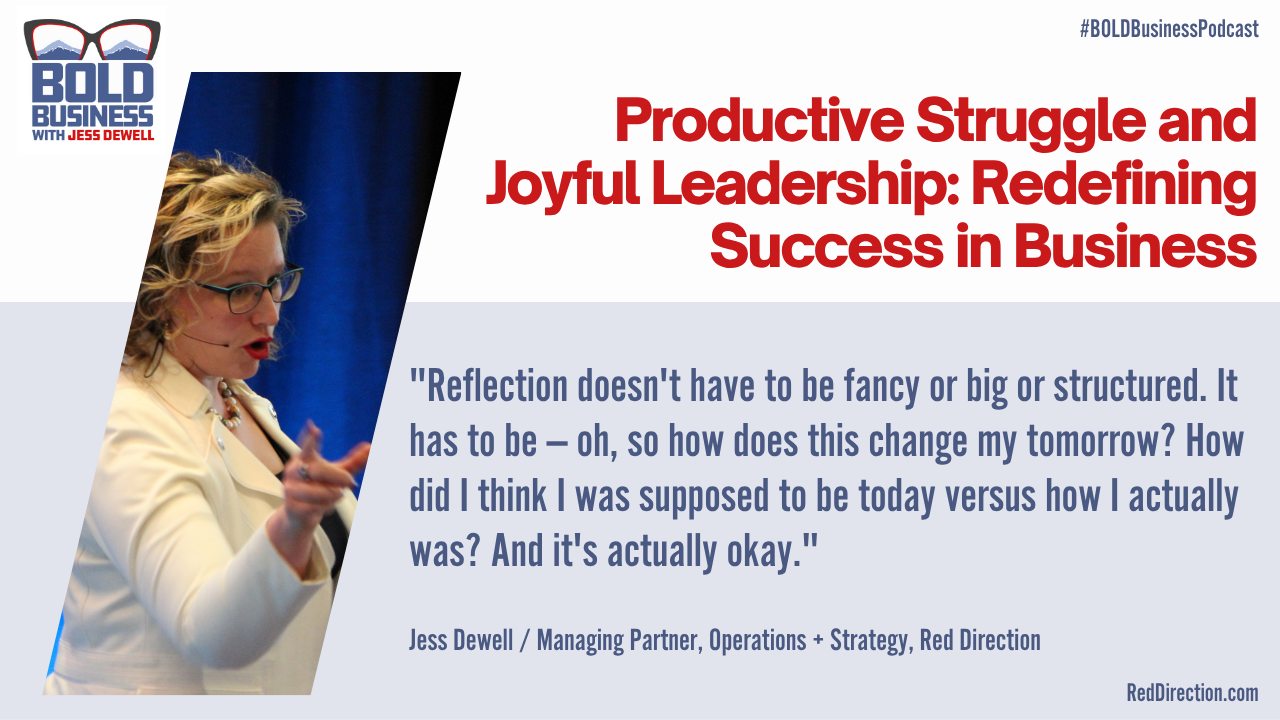
I hear you. And though I’m big into reflection, probably because I don’t do enough of it. I’ll be real. To your point at the beginning about the rate of change and how much things are changing. And that is also very real. I do think some of it is time goes faster as we get older. I think that everything is changing faster than time for us for the first time in ever. All we think that is. So here we are. Yeah. It’s really interesting because reflection doesn’t have to be fancy or big or structured. To your point, it has to be, oh, so how does this change my tomorrow? Oh, how did I think I was supposed to be today versus how I actually was? And it’s actually okay.
Dr. Jennifer Berry 26:05
I said this to somebody the other day. I can’t remember. But do you remember that old stop, drop, and roll when there was a fire? Yes. I have coined this for myself. And I’m trying to socialize it a little bit with my organization to see if it’s taking root. But more importantly, I just do it for myself. And I named it Stop, Walk, and Think. I need to move. And when I’m frustrated with personal stuff, let’s say we just got a new puppy and he’s 12 weeks old and he’s all puppy and he’s nipping and he’s doing all the things and he’s peeing in the house and it’s just all the things. And we’re doing the training and I’m like, I’m going to get this dog free. And I brought in an in-house trainer to help us. And now I’m practicing. And he’s still peeing in his phone. I’m getting frustrated. I have to say, Jennifer, stop, walk, and think. And don’t bring your phone. Get outside. Stop, walk, and think. And that just stopped. Because to me, the frustration with the puppy is a fire. It’s a fire. So I’m like, what do you do when there’s a fire? You stop, drop, and roll. Real fire? Stop, walk, and think. This fire. I do that at work, too. And I’m trying to give people permission at my job. I know you have a meeting that is coming. In fact, we’re in a virtual environment. So we have back-to-back meetings on Teams. So we’re like Teams and you never get a break. And I tell people, you know what? I’m going to, and I’d model this. Like, I just finished a meeting. It was a tough one. I’m feeling all kinds of feelings. I need 15 minutes to walk outside. I’m going to stop walking, think, and then I’ll join you in 15 after. And they’re like, okay, great. So I’m trying to model it. And I actually do it. I shut my computer down, put my phone down. I put my tennis shoes on and I walk around a lot. Now I have a dog to walk around. So that makes it even more special. But I walk around the block because getting outside, moving my body, stopping that pattern of frustration and that pattern of, oh, I don’t know what I’m doing. Why isn’t this working? That walking was really powerful for me and has helped me and served me. And I needed a catchphrase to remind me when there’s personal or professional fires happening, what do you do? You stop walking. You think it changes so much. I come back with new ideas. I come back with a fresh mindset. Sometimes there’s no ideas, but I’m calmer. So that’s just a little trick and tip that I’ve used for myself because I needed it.
Jess Dewell 28:22
As you were describing that, there were two points. My body went, there is something to this. So there’s your feedback from me. Like you had a visceral response of stop, walk, think, have some presence and power there. And it’s true. The expectation of being in meetings versus the expectation of being able to do deep, productive work, that is a real struggle today. And it’s not because of a lack of effort. It’s not because of a lack of interest. It’s not because of people not being efficient enough. It just is somehow, but then our time isn’t our own. And so it’s really not as collaborative as it could be. And making those breaks is important. Each week I do a deep work session that’s strategic, right? So you have your three-year goal, 36 months, and you’re breaking that down. Every Monday, I have time that I’m spending looking out at mine. Mine’s actually, it’s either 24 months or 60 months. It’s whatever both of them are. So it’s on either side of what you’ve got. And then that’s only a little piece of it. It’s this other stuff. And you know how I start and end that work session?
Dr. Jennifer Berry 29:25
How?
Jess Dewell 29:25
Being outside and taking a walk.
Dr. Jennifer Berry 29:27
I love it.
Jess Dewell 29:28
It’s a, I’m making a transition to be present. And the walk around the block is actually probably about the same amount of time it takes to get undistracted from an interruption these days.
Dr. Jennifer Berry 29:38
You get a twofer. I love that. There’s some other little tricks that I’ve learned over the years. I use it usually when I’m stuck. That’s not really a word. But you know what I’m saying? If I’m struggling with an innovative approach to something, I’m like, I can’t go through this. I keep saying to everybody, be innovative. And yet I’m just coming up with the same answer over and over. I’m like, this is not very innovative of me. So I do these little pattern grades. So for example, I always go get Starbucks and I probably should have invested in Starbucks because I’ve spent a lot of money. And I get a $5 green iced tea, which I could tell you is water and a teabag. But yet there’s something really special about the Starbucks water, teabag, nice cup. And so what I do is I drive a different route to get to the same Starbucks. So I’d normally go turn right. I’ll back out of my driveway and go, you know what? I’m going to go left instead of right. And I’m going to go around to get to that Starbucks. Pattern break. I’m amazed by the time I get back to my desk, an innovative thought pops in my head. I’m like, oh, what if we tried it this way? I’m amazed by it. And it was just because I broke that pattern that I’m so used to. Or I’ll say, I’m going to listen to a different radio station. I have Siri. So normally, because I have an 11-year-old who I’m listening to hits one, and so I’m like, no, I’m going to scroll down, and I’m going to get a different radio station, maybe one music that I don’t even listen to, and just listen to a song that maybe isn’t a coffee shop station, and it changes my, it breaks my pattern. Or I brush my teeth with my left hand instead of my right hand. Like these little micro shifts that you have to be intentional about. I almost find it like rebellion in a way that if I brush my teeth with my right hand, I’m being rebellious by brushing it with my left hand.
Jess Dewell 31:31
And I love that you called that out. This embracing rebellion is exactly where innovation, creativity, problem solving at its best comes from.
Dr. Jennifer Berry 31:41
Yeah. And it’s that micro, those microactive rebellion moments that have these things pop into your head.
Jess Dewell 31:48
I’m just saying when we do it small, then we can come across as not actually rebelling because we did it in our own way to free our own. I wonder, this could be as powerful as meditation in some ways is what I’m taking away because you notice your thoughts and let them go versus doing something different to let new thoughts in. And we’re talking about adaptability here, Jennifer, and it’s individual adaptability, how we can show up to support each other as we’re each living our own lives coming together to do our work together and make a difference in the world. But it’s also gives us a basis, which we can have the dynamics between us are actually, I really want to say something like dynamicism. Is that a word? I might’ve just, I like it, make it a word. Right. When things, whether it’s external factors, our own planning directives from those that are also helping us guide the company, wherever it’s coming from, we get shifts demanded of us. And so, so being able to flex and adapt with those matters.
Dr. Jennifer Berry 32:49
Yeah, it matters a lot. And it teaches you to notice things. When you follow a pattern, I’m not noticing things. I’m in my own head. I’m not noticing anything because I’m going the same route that I go every single day. When I have to go a different pattern, I’m like, oh, I didn’t notice that speed bump here and this road. Or there’s my friend walking by. So when you take that back to the work environment, I’m a CEO of this company. I have to notice what my team is feeling. I have to be like, oh, they’re not showing up on the screen in a good mood today. Or I’m in a lab. I’m doing a STEM identity day with the students or the facilitators, and I’m noticing they’re struggling with something. Oh, I’m talking to that superintendent, and he’s coming in and telling me that this isn’t working for whatever reason. I’m noticing his body language. I’m noticing. But breaking patterns can help you notice things. So therefore, when you’re in a work environment, you’re more adaptable because you’re noticing things. You’re not in the single, this is my idea as a CEO. We’re going to do it this way. That’s how we’re going to do it. Opposed to, I have this idea, but let me look around. Is there something else I’m missing? Is there some other signal that I’m not seeing? And so that noticing things is really key. Yeah, notice, notice that. I’m not going to yell at you, put your backpack up on the thing, clean your lunch table. But I’m going to say, hey, did you notice anything? Like when you walked by four times and you tripped on your backpack, did you notice? And she, oh, my backpack. And then she goes and that’s it. So I’m teaching her how to notice something. And because her brain isn’t developed yet, she doesn’t have the executive functioning skills yet to notice those things. So I’m trying to train her brain to notice things. And I think in a work setting, especially as a leader of an organization, it’s key because you can get, you can fall in love with your own ideas.
Announcer 34:44
If your week feels like you’re being pulled from one demand to the next, this is for you. The Daily Grind is the number one killer of business instinct, pulling you and your team away from your vision. Reclaim your strategic edge with The Present Retreat. This free guide from Red Direction is a simple, powerful framework to carve out the space you need to filter out the noise, make the right decisions, and lead with clarity, visit presentretreat.com.
Jess Dewell 35:10
Dr. Jennifer Berry is our guest today on the Bold Business Podcast. We are talking about productive struggle and joyful leadership. The ability to notice is almost just,okay, it’s okay that I am the way that I am right here right now. Okay. It’s okay that this problem showed up.
Dr. Jennifer Berry 35:29
We’ll figure it out. This is a challenge. I can figure this out too, because I’ve done it before. I have the tools. I have the skills. I have the mindset. We’re going to work to get this together.
Jess Dewell 35:37
Have you ever had to lead your team here at Smart Lab or even prior to Smart Lab, a team through very big, long-lasting change? Yeah. I think especially since COVID, I think there’s been longer change cycles than I’ve seen.
Dr. Jennifer Berry 35:52
Although things are rapidly changing, the way in which change flows through an org seems longer. Feels that way to me too. I talked to my head of people the other day about this. And I wonder if that experience that we all had depleted a lot of people. It depleted people in a way that even six years later, our cups aren’t fully full yet. So any kind of change or any type of challenge, we immediately go a little bit under the surface because we weren’t above the surface. And then the challenge happened. And OK, we’re still slightly lower. It’s hard, but we’re not like in the dark. [Yeah.] So the organizational change that I’ve had to lead the teams through in my last org and this org seems longer. And I look at it and focus on how do we, even in the darkest times, even in the hardest stuff, find joy in what we’re doing, find joy in each other, find joy in even external noise that we’re faced with. Because this, I could speak for this country right now, there’s a lot of polarization. You turn on the news, you just want to like, I don’t even watch it anymore because I just can’t. It’s just, it sucks you dry. There’s polarization, there’s hate, there’s fear, there’s comparison. You know, social media has got all this comparison culture. I ensure that I’m present and contributing to the greater good of society, but I’m focused on living my life personally in my family life, in my community, and in my organization through the lens of joy, even in the hard times. Because Joy is, am I fulfilled by this mission? Am I fulfilled by this work? Are people productive? Am I productive? Are we working towards a goal that feels achievable and yet also a stretch so that we’re constantly pushing ourselves to be better versions of ourselves, better versions for our customer, better versions for the company and stakeholders we serve? So I look at joy from like, how do we pull joy out of these micro moments? How do we live in a joyful vibration? I don’t want to sound too heady and meta, but a joyful vibration versus that dark and doom, everything’s caving around us vibration. Because I refuse to believe that we are not capable of more as a society, as an organization, and as individuals.
Jess Dewell 38:23
It comes back to, I belong here in a whole different way, is what you’re, I think, bringing to the table and I will fully embrace that and say, hey, it’s necessary. So where I’m going with this, those empathy and compassion and the willingness to see, really see each other, be in the same space as each other, even across the screen, like what we’re doing here, it’s as important or more important process, automation, all of that has a place.
Dr. Jennifer Berry 38:53
It has an important place as long as it’s not happening as a cost to this. And I think even more so with the speed of AI because you can get artificial intelligence to do a lot for you. And so they can optimize. It can do a lot of things. And so this humanity is more critical. And that’s why when we say STEM identity for learners, what we do is we put in STEM ecosystem, STEM learning labs in school districts. That’s what we do. But that’s not why we’re doing this. Like why we’re doing this is so that kids can come out on the other side, again, feeling like people are feeling like their ideas add value and that they can stir challenges. And so that in that you have to have empathy. You have to have activity with others. All these words that you were talking about, you have to not be alone in that because you belong somewhere innately. We belong in society. We’re part of something. We’re part of the fabric of more than just a solo effort. And so that is really important to me. I also find that unique ability to be vulnerable is hard and also really beautiful when you can do it in a safe space. And those people that I see that are vulnerable, I just crave, I crave hearing them talk. I was so lucky that my mother really helped raise and has helped raise our daughter with us. And she lives in LA. We live in San Diego, but she comes down often. She spends months at a time with us. And I witnessed my daughter just listening to my mom’s story. My mother’s eight. So there was a life way before the internet, a life way before computers, a life where storytelling was the way in which we passed. You think about the indigenous people, that the storytelling with the going around and telling stories and passing the story from generation to generation was rooted in the culture. And so this idea of storytelling and generational story cannot be done through technology. It can’t. People think, oh, let me type in something and ask, tell me a story about what happened back in the 1800s. And it tells you a story. Cool. But there’s nothing that replaces my mother telling my daughter her experience. as a woman in the 50s. But nothing can replace that. No movie, no podcast, no article, no blog. Nothing can replace my mother talking to my daughter about that. It’s bringing tears to my eyes. And that storytelling, I think, is really important for us. And I think only humans can do that. Only human, human to human, because you can, even through the screen, you can feel me tell you a story versus a robot telling you that or versus AI blogging about it. That to me is really critical. And we can use AI and the robots and all of the technology to optimize, to serve us in a way that is necessary for productive, efficient organizations or running a household event. But nothing replaces that human connection. Nothing. Nothing at all. That generational storytelling, handing down a story so that my daughter goes, I would never, that’s not going to, no, wait. you were not allowed to do that. You were not as a woman, allowed to say that or do that. And my mom’s like, yeah, that was real. Like, I love that conversation between these generations. And so it’s a really beautiful reminder that human connection is so necessary, which is why at Smart Lab, we actually spend a lot of time not just giving you the curriculum, not just giving you kits and equipment, not just giving you the furniture, even for your land, but also we really focus on certifying the facilitator to make sure the facilitator can use all the equipment and tools and teach the curriculum, but really can interact with a student. So they’re not giving students answers, but they’re letting the students have productive struggle in what they’re doing, because that productive struggle is that rich moment where you’re moving from know how to do something to I’m empowered to figure something out. I’m this is where I want to figure this out, That productive struggle is like, this isn’t working. Okay, I’m gonna. We watch babies do that all the time.
Jess Dewell 43:12
What makes it bold, Jennifer? What makes it bold to intentionally design environments in the classroom, out of the classroom, in life, in our homes, in our business, with each other, to get that expected struggle productively, to be able to engage those challenges rather than stepping in and rescuing?
Dr. Jennifer Berry 43:30
Yeah. I think what’s bold is being okay with not knowing all the answers ourselves. Bold is not fearing the hard. And that means really seeking out diversity of thinking, diversity of culture, diversity of approaches. That means being really inclusive by saying, I don’t have the answers. I don’t know how to do this or what to do. And just not being afraid of that. My mother said, the one thing I know is that I don’t know anything. And I just love that because that means you can constantly learn and evolve. And so what being bold is not fearing that you don’t know at all, not fearing the hard. And then if you’re not afraid of that, then you can really build learning environments for kids that can be really healthy and life-changing. But you can also build an organization where people want to be there. They want to be at the table. They feel included. They feel like their voice matters. They feel like you’re their steam. even if they look different or act different or eat different foods or whatever the case may be. I think that’s bold to say, I don’t have all the answers. I don’t fear the heart, but I certainly can’t do this a lot.
Announcer 44:51
And that brings us to the close of another powerful and fresh perspective on the Bold Business Podcast. In today’s volatile landscape, growth is a double-edged sword. To truly thrive, you must engage with your strategy, not just react to the day-to-day. Without absolute alignment, your company faces a stark choice. Outmaneuver or be outmaneuvered. Grow or get left behind. Thank you for listening. And a special thanks to the Scott Treatment for Technical Production.