





STOP REFINING A FAILING STRATEGY – ARCHITECT A RESILIENT ONE.
FROM LINEAR PLANNING ➔ ADAPTIVE ARCHITECTURE
With Red Direction Growth Framework Reset Consultation, audit the strategic foundation via the structural stress-testing to eliminate obsolescence guaranteed by a 10x increase in modal resilience.
Starting the conversation:
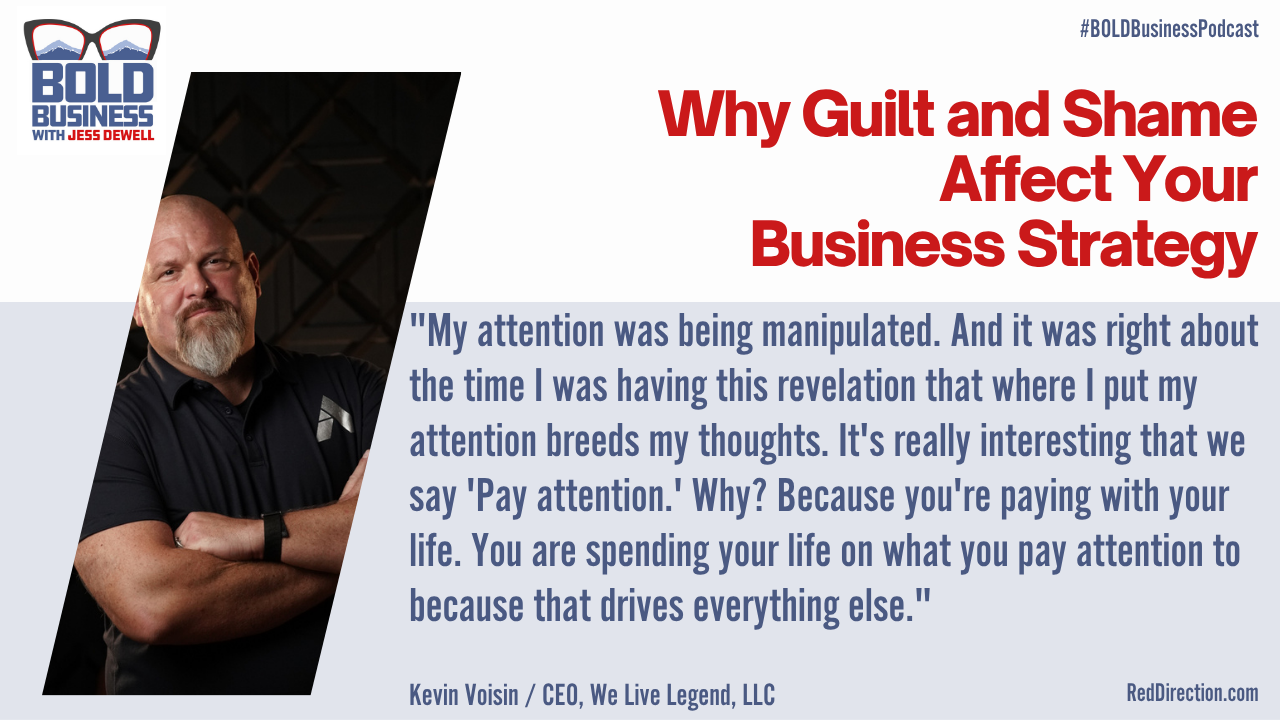
Past successes are just that. In the past. Experience counts, yet situations change and evolve so relying on past success for future success is fallacy. Coach Kevin Voisin, CEO at We Live Legend, LLC, shares with us that consistent learning, adapting, and honest self-evaluation are what root out hidden guilt and shame to increase your future success.
Perfection is not an attainable destination, and it may be lurking in the way you lead your company everyday. Embrace that, and the way you navigate growth looks very different because you truly know what is essential. This discussion will challenge you to look at risk, failure, and self-advocacy in a whole new light.
In this episode, you will hear that undesired results are justified through numbers and metrics, that decisions can always be changed as they are not set in stone, and that past successes do not ensure future success. Jess Dewell talks with Coach Kevin Voisin, CEO at We Live Legend, LLC, about how to let go of past success to make room for new choices that have no guarantee of ROI.
Host: Jess Dewell
Guests: Kevin Voisin
What You Will Hear:
03:35 This section explores the realization of mortality, the feelings it evokes, and the wisdom we can draw from philosophers like the Stoics to reflect on how to live meaningfully.
- How moments of clarity about the finiteness of life lead people to seek perspective from ancient wisdom.
- When things are not as infinite as believed often prompt self-reflection.
- Awareness of mortality can stimulate both anxiety and inspiration for growth.
09:15 Personal struggles with shame and guilt — from health to dependency — and emphasize the importance of confronting and processing those feelings to move forward.
- Personal examples of dealing with guilt and shame during a period of illness and dependency, underscoring the difficulty of accepting help.
- Community and outside support are vital for managing and overcoming these emotions.
- The length of time it takes to shift from shame and guilt varies, but recognizing their impact is an important step.
15:35 The distinct challenges of making business decisions, including the risks involved and the emotional weight of letting go or moving forward.
- Guilt and shame present differently in business but are typically hidden behind facts and figures rather than spoken about openly.
- The risks in business often require courage to either take new actions or walk away from what is no longer working.
- Decision-making in business is shaped by both personal values and the pressure to maintain appearances.
23:20 Perfection is an illusion, serving only as a guidepost rather than a destination.
- Perfectionism is a false horizon; the closer you get, the more flaws appear.
- Guilt and shame are often driven by the belief that one should have achieved an impossible standard.
- Using perfection as a benchmark can be helpful for growth, but believing in its attainability is damaging.
30:50 The mistaken belief in the permanence of business decisions.
- Many entrepreneurs operate with the assumption that today’s risks and ventures will be everlasting, which can impede necessary pivots.
- Both the external market and personal circumstances change, making flexibility crucial.
- Real success involves recognizing obsolescence risks and embracing change rather than resisting it.
35:20 The importance of planning for a business exit from the beginning.
- Most business owners eagerly invest in starting up but neglect exit planning, leading to avoidable losses or missed opportunities.
- Businesses thrive longer when they adapt and reinvent themselves, not when they pretend permanence.
- Proactively considering exit strategies can transform failure into learning or profit.
42:25 The importance of self-care, personal metrics, and daily discipline, are part of a life that includes running a business, one’s own personal well-being, and being accountable in relationships.
- A morning routine focused on self-investment to ensure continued energy and influence.
- Measure progress in personal life is just as vital as in business, and routines help prevent burnout.
- Balance is achieved by keeping track of what matters in all areas, not just work.
48:49 It is BOLD to let go of your past success to make room for a new choice that has no guarantee of ROI.
Resources
Transcript
Jess Dewell 00:00
I am a big believer that zero decision is set in stone. Zero decision is set in stone.
Kevin Voisin 00:06
Everything changes, right?
Announcer 00:13
Every leader needs a trusted partner for the moments that matter. This Bold Business Podcast conversation is that partnership. Your go-to resource designed to break the inertia and refresh your perspective so you can start making moves. Here is your host, an insightful truth teller who serves as the catalyst for getting the right work done and who asks the questions that truly matter. Jess Dewell.
Jess Dewell 00:40
There are a lot of things that disguise guilt and shame. In business, it usually is around numbers and metrics. And so we’re going to dig into that a little bit today. And we’re going to talk about that so that we can actually be making the right decisions at the right time and staying strategic over time. To talk about this with me today is Coach Kevin Voisin. He is a catalyst for waking sleeping giants. Demands the truth, honesty, accountability, and embracing your own imperfect self. He’s worked with tens of thousands of entrepreneurs and leaders over the years and helps them build their own unique, sustainable mindset. As we’re talking in this conversation, there’s a lot of interesting things that come up. He gave us a quick exercise. He gave us some quotes. He suggested that we approach and look at things a little differently. And I’m going to call out three areas for you to listen for throughout our conversation so that you know you are on track with exactly what we are talking about as we go. The first thing I know you’re going to take away and want to know about before we begin is that guilt in business is typically justified as numbers. So we’re hiding it and disguising it. Number two, our decisions are not set in stone? Are you doing hard work or are you doing hard work that’s worth doing? And the third, our past successes don’t guarantee our future ones. Have a great time. Tell us what you think at the end.
Kevin Voisin 02:07
I really don’t like it. I think if you’re mining my attention, you’re mining my life.
Jess Dewell 02:13
Okay. Let’s talk about that. When you say, we say pay attention because we’re actually paying with our life…
Kevin Voisin 02:26
You’re spending your life. That’s what you’re spending. When you pay for attention, you’re spending your life because think about, this is Seneca. Okay. This is a great, great book, totally free on the shortness of life. And it’s really, it’s like really excerpts from in Kyridian and a few other things he wrote, but on shortness of life is about an hour. Like the audio book is so short, you can consume it like right now. And he talks about this, that you would never take all of your life savings, hold it in your arms, walk down the street and just throw bundles of it at every person. Like each person, you’re at the coffee shop, the barista’s like, hey, how are you doing? And you just throw them a pile of cash. And then the next person sits down, is this seat taken? You throw some money at them. You would never do that. You’d never throw your life savings at people. And yet time, which is the only thing more precious than money. And I don’t mean that money is, look, money is how we exchange all value. So it is the most valuable thing because it represents all value. Okay. I’m not saying that like money’s worth more than a person or I’m just saying like it is the representation. The only thing we know we have less of is time. That’s finite for everybody.
Jess Dewell 03:28
Everybody has the same amount.
Kevin Voisin 03:30
And time is weird though, because we don’t know when we die, it feels endless, right? Because every day we die and we go to sleep and every day we’re born, we wake up. And so we’re like, Oh, I’m never going to die. I do this every day. Every day I close my eyes and then I wake up again.
Jess Dewell 03:46
I’m fascinated with this concept because it’s like the plateaus in life. And that’s when we come back to this. Oh, maybe our time isn’t infinite. Oh, maybe this is when we look back at Seneca or any of the Stoics and hear what they have to say. And we can take it many ways to our, oh, how does that apply to us today? And look how they overcame it. Others could be, what do I want to be from this? How can I actually take advantage of this? What questions can I ask myself? And what questions would they ask me if they were here? Would maybe another way to say that. And so when we get to those, when we get to those places where we have plateaus and we get to those places where we’re like, oh, maybe things aren’t as infinite as we thought. There are feelings that start to show up here, aren’t there?
Kevin Voisin 04:37
Yeah. A hundred percent. Yeah. 100% chance. You’re going to die. I’m going to die. 100% chance. Everybody is going to die. And everybody who even knows that you exist will die. Like in three generations, no one who’s ever even known you or no one who could even remember you will be alive. And that’s not a lot of time. We’re talking about 75 years. When you say three generations, it makes it sound like for all time, but you’re talking about one lifetime is three generations of people. And so what’s optional though is living death is required it’s part of the game like when you were born you started racing towards that death date whenever it is but what’s really interesting is the 100 chance that we are finite but without knowing the date makes it feel and this will tell you how how untrue feelings often are makes it feel like it lasts forever because because once your time is up you’re gone yeah so you’re not here to talk about how that felt anyway right like wherever you are you’re not here. So we don’t ever hear it. So it’s just like this infinite flow. Having had a heart attack and in a moment I had something go terribly wrong. I was getting a stint put in after a heart attack and my ephemeral artery broke. I don’t know how to describe that. It was horrible. I wouldn’t recommend it. And at a moment, blood is pooling everywhere. I’m there not being able to control it. And I’m literally about to pass out. And I literally thought, wow, I die right now. That was not I’m dying. Not like I die right now. This is it. And I thought, number one, okay, my wife knows I love her. Number two, my kids know that I love them. And then number three, the weirdest last thought of all time. Man, I always thought I would run an Ironman.
Jess Dewell 06:16
That’s not weird. And then I pass out.
Kevin Voisin 06:19
But side note, I did do a relay on Sunday. I’m in training for this November.
Jess Dewell 06:24
Okay, so way to tie that in. And by the way, I’m just saying congratulations. That is a great thing to have thought about and now to recognize and then to take action on. Did you have, okay, so then when it was all over, I’m going to jump ahead just a little. And if you think I’m jumping too fast, please say so. Let’s say the running of the Ironman or participating in it in any way, or even training for it had never happened. When you came back and during your recovery and as you were making these different life choices of being intentional in a different way, of using time in a different way, did you experience shame and guilt?
Kevin Voisin 06:56
Yeah, of course. because even in a way, but it was really weird. That moment that I was dying, there was no negative. There was no desperation. It was just happening. You only had a second. It’s done. I’m passing out, and that to me meant, oh, I’m dead. And I just thought, man, always thought that, and then black. But then, of course, I woke up, and I wasn’t actually dead. I didn’t actually die. And yeah, when I came back, the first time I tried to work out was when the shame and guilt came is because, as you can imagine, I’ve run two Ironman 70.3s before when I was younger. One of them probably with 90% plus blockage of my heart. Like one of them was so close to the heart attack that actually, oh my gosh, no wonder that was so hard, right? I had all this blockage. But I tried to run for the first time. And imagine that having a heart attack is not the best activity to improve your cardiovascular capability, right? So it was like the worst. I played sports since I was nine. And it was probably the hardest, most pathetic run since I was nine. And I remember just feeling so humbled and feeling so guilty. And like, how can I even have this target? Like, why would I even think this? Like, this isn’t me. Like, I can’t do this anymore. I’m too. All the stuff you think, right? All the, your mind is such a funny thing because it will just justify whatever you’re already feeling.
Jess Dewell 08:15
Yeah. And okay. So we’re right in there. It’s interesting. You used humble and guilt in the same sentence. And I know there’s a distinction. And I know from just the few conversations we’ve had, you have a distinction.
Kevin Voisin 08:29
Humble is what I’m telling you right now.
Jess Dewell 08:31
Yeah. Okay.
Kevin Voisin 08:31
Guilt is where I was right in that moment. In that moment of losing your breath. Yeah. It’s like, how did I become this? Like, how did I let this happen? Now, look, there’s lots of reasons to have a heart attack. Okay. Some of it is diet and exercise. Some of it is genetic. So I don’t want to be so reductive that it’s just, oh, I just treated myself like shit. And it isn’t that simple. It really isn’t. Right. But I will say in that moment when I couldn’t run and I realized how hard this was going to be, that’s where my mind went. Oh, you let everything go. You ruined yourself. And now it’s never going to come back. And now you do that. And it’s humble now because you have to swallow it. You can’t run away from a heart attack. It’s not like I had a cold. There’s no explanation. It’s happened. And now it’s like, wow.
Jess Dewell 09:16
Here’s a less severe experience that I could bring to the table because I also have had experience of shame and guilt around something possibly likely in my control, also very genetic. And that was incredibly bad lower back pain. And it was due to chronic stress, actually. So here was something that hindsight, 20 years later, I can go, oh, that’s chronic stress. And I can say, hey, I’ve made these changes. But in those moments, when you’re actually living that way, whatever that way is, that’s the reality. And so to just be able to go, yeah, that is. And here’s the deal. And I’m bringing it up for a couple of reasons, not to only to invite people to look at things in their lives at whatever scale it showed up at to be able to relate to us here. And so in my case, I ended up on really heavy prescription-regulated medication that didn’t work. And had I not had a partner, my husband, go keeping track of the time and the dose, I could be an addict today. So there were all of these things that came up together that I was having problems because I had to take this medication at all in terms of shame and guilt. Why can’t I just power through? This is what I was taught to do. All of those things showed up. Somebody else has to help me. Oh, my gosh. Are you kidding me? I’m supposed to be able to be independent and fix myself. Humble. Looking back, it was a lot of community. You plus others. You. A little bit more. You. And to bring it back to the conversation that we’re having here of, there’s a lot to work through. How do you do what you do? Shortly after that, I actually emceed an event. And behind the scenes, when I was not on stage, I was flat on the floor behind the stage because I couldn’t stay standing. So I’d stand for my 10 to 15 minutes and I’d go lay down for 40 until they needed me again. Stand up and I’d go do it. And I did that all day. And then I had to basically be wheeled out of there. So you do it. And at that point, by the way, I think that was just bad self-care. That was not doing what needed to be done. So to your point of could it be genetic? Absolutely. Was it conditioned? Absolutely. And then what do you do with that shame and the guilt, I think matters. And it took me a long time to shift that. How about you, Coach Kevin?
Kevin Voisin 11:33
So I have a great, I have the remedy to shame and guilt. I’m so excited.
Jess Dewell 11:38
Jump right in.
Kevin Voisin 11:39
I have this saying, and if you’re listening, you’ll love this. You can write it down. No guilt, no shame, new choices. Okay. Now this is not to say that guilt and shame don’t have purpose and they aren’t wonderful and positive things that can be. Okay. It guilt. If you identify what guilt is, ultimately that’s me telling myself, shouldn’t have done that. Damn. I ought not to, I don’t want to have done that. the best way I think to say that I don’t want to have done that. Like, dang, that hurt someone. I didn’t want to hurt them. I knew I should have known, like, I don’t want to have done that. Shame is more societal. Shame is like a community you’re in, whatever that is, is saying you shouldn’t do that. It’s more from the outside in saying, Hey, you’re not supposed to do that. Right now with guilt, it’s easy. Cause if you’re thinking, I don’t want to have done that. Well then you don’t need to think any further, whether that’s right or not. With shame, sometimes you have to say, hey, do I accept that opinion? Like someone’s shaming me for something. Do I accept that? Do I actually agree with that? If I do, cool, then I can make a change. And if I don’t, then I can say, well, you know, I disagree. That’s not, I’m not going to bow to that authority. Cool. What resolves guilt and shame, though, is new choices. Meaning I do something, I feel, oh, man, I don’t want to have done that. Then I make the new choice. And now guilt is useless. Once I’m making the new choice, there’s no point in carrying it around. You know, it does have a function. It’s like, hey, I don’t want to done that.
Jess Dewell 13:06
Yeah. So, yeah. And actually, okay, can I go so far as to say, and I might be totally wrong on this, but I would say once you make that new choice, guilt, there’s just no, you said it in a different way, I think. There is no place for guilt here.
Kevin Voisin 13:22
Yeah. Once you’ve made the new choice, then what else can you do? Right. For example, like in my first marriage, I was a cheater, like a serial cheater. Right. Like serial cheater. Every relationship I ever had, I cheated. There’s damage in me. There’s all these reasons or whatever, but I did. I’m not that guy anymore. I’m not a cheater anymore, but I will always be a cheater because, hey, I cheated. And so I get to carry some coward’s baggage with that, but I don’t need to carry the guilt. I’m not cheating. I’m not doing any of that. That’s not who I am anymore. We all have things like that where the guilt of it is useful in the stopping. That’s why I’m not that person anymore. The guilt of it is like, hey, we don’t like this. By we, I mean me. I don’t like this. It’s just easier to say we when you’re talking about something like this.
Jess Dewell 14:04
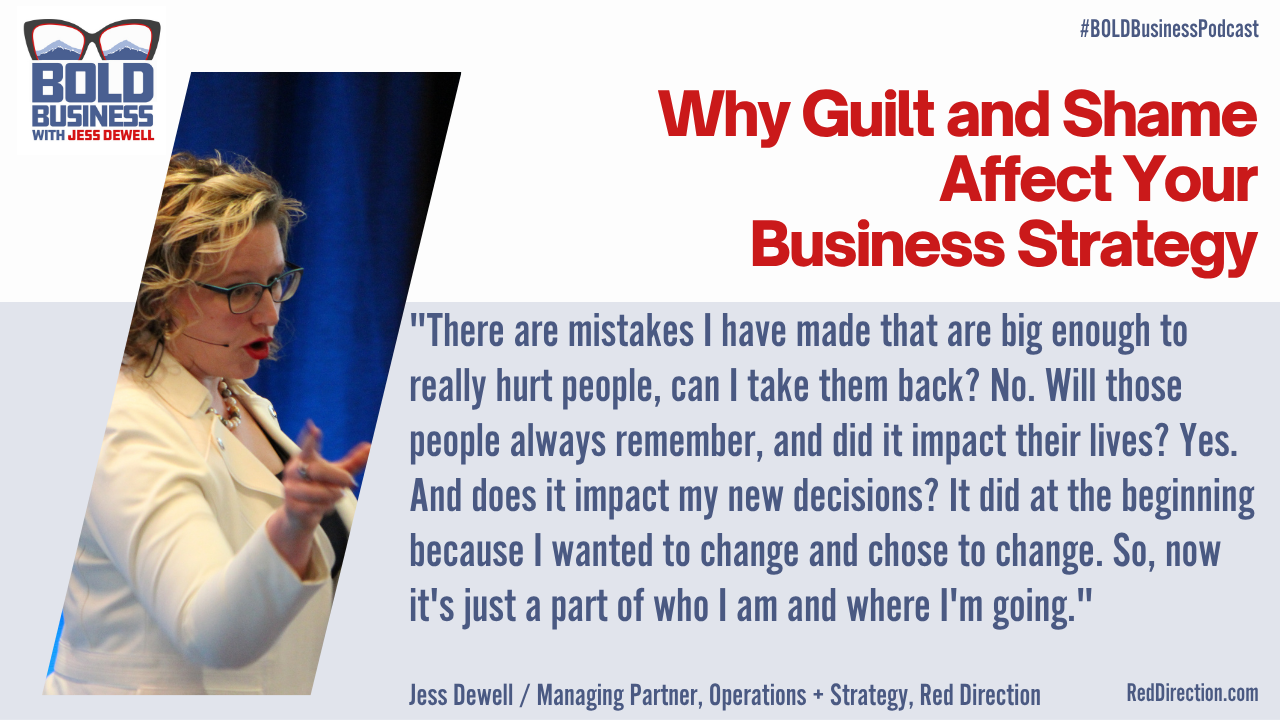
But you can include me in the we. I will say there are mistakes that I have made that are big enough that really hurt other people. And can I take them back? No. Will those people always remember and did it impact their lives? Yes. And does it impact my new decisions? It did at the beginning because I wanted to change and chose to change. So, yeah, now it’s just a part of who I am and where I’m going.
Kevin Voisin 14:26
Yeah. And the new choice then resolves the guilt, resolves the shame. Now remember with shame, the first choice is, do I accept this authority or not? And that the first new shame, it might be, Hey, you shouldn’t wear that. And then I’m like, I don’t really agree. And I don’t think you’re the police on what I should wear. So the new choice is to reject the authority that is, you know, reject the community that’s telling me, which is fine. That’ll have a consequence too. But there are times when it’s just like, eh, I’m not going to accept that shame. It’s fine. It’s okay for you to feel that way. You can feel however you want, but.
Announcer 15:01
Feeling stuck? Like, what got you here won’t get you there. The pressure to grow is on, yet the path isn’t clear. Yet. You don’t have to walk that path alone. This is the Bold Business Podcast. Like and subscribe wherever you listen. Your host, Jess Dewell, is the strategic partner you’ve been looking for, asking the questions that truly matter. It’s time to break the inertia and get the perspective you need to make your next move.
Jess Dewell 15:36
I want to shift this because we look at guilt and shame in business differently, and we don’t talk about it in the same way. And I wish we did more. And that’s one of the reasons I’m really glad we’re having this conversation because we have a different kind of risk that shows up here. We have a different kind of decision making and where do we actually have to go to to either take a risk or to, I guess I’m going to say just to stop at, take the risk, go, no go. Do this a little bit more. Let go of something that’s not. So do you have, I’m just thinking through this a little bit because I don’t know how I want to transition into this. So maybe you, this was enough for you to run with. You like that? Here’s how I roll, Coach Kevin.
Kevin Voisin 16:21
Why not? I love it. I think in business guilt is a huge thing and we just justify it with a bunch more numbers. Remember as human beings, it would be cool if our brains evolved to be, sorry, a scientist who weighed everything meticulously, did tests and then decided. But really, our brains have evolved to be lawyers. Like we have a feeling, we want to justify it. And so here comes a really great argument as to why that feeling is justified and should be seen as the truth. Right. Why is that true? So why did we develop this? But there’s a really simple explanation. Like it’s a it’s a, it’s a thought experiment you can do in five seconds is this. If. Which one is better for you in your community? OK, not in I’m not saying in some moral internal space, I’m saying in your neighborhood. if every time you talked everyone knew you were telling the truth but you were actually lying or if in your neighborhood every time you talked everyone knew you were lying even though you were telling the truth which one of those serves you better as a person in your community of course the one where everybody thinks you’re telling the truth right it’s just what it is that social reality, right? Will create this weird mind that just justifies things. Because why? Because if we can just talk them into seeing why we did it, then they’ll be on our team. Because ultimately what we need is our community to stay together and to have a strong team. It doesn’t matter if the real facts are aligned or what matters is, man, I might need you and I don’t have Buffalo and you might need me when you don’t have Buffalo and whatever I got to say right now to make this thing come together. That’s why we lie. Right. But then the problem with that lying, we all lie because it works. It does grease the wheels of a lot of different things. But the problem with that is then what happens when reality doesn’t match what it needs to be? And in business, you can’t hide from this. Hey, me and my best friend just got in business together. I’ve guaranteed him we’re going to pay him $6,000 a month no matter what. And we don’t sell anything. And we’re a live event company and COVID just happened. And now I have to tell him we can’t pay him, even though I just promised that we can. And now what do we do and how do we end this? And it’s just all bad answers. Like sometimes in business and in life, but in business, the numbers are just the wrong direction. It’s time to let go. But when you’ve mixed personal relationships and you mixed your purpose with that, it can be really hard. And so you start feeling this guilt and shame, but that’s not really allowed in business. So then you just start looking at the market. That’s what you’ll hear people. It’s all the market, the market. As if you can get rich in every market, you can get poor in every market. But people really start talking about the market because they don’t want to own. Hey, I made some mistakes.
Jess Dewell 19:11
Yeah. So how do we flip that script? Right. So let’s say we’re in a play. And by the way, oh, before we even go there, we can, if I can remember that, we’ll come back there. I want to say that this is true. we as humans as creative as we are want to continue to move in whatever direction we have decided wherever we have found curiosity and interest and possibility and at the same point in time to your point it can get really bad before we can go whoops that’s actually what the writing has always been on the wall we’re just now able to see it and i do think when we’re really good at we’re good at disguising productivity. We’re good at disguising discipline. We’re good at disguising trustworthiness. We’ll be good at disguising vision. We’re good at disguising. Oh, we’re actually also good at disguising the depth of relationship too. And all of these things are in our, in every part Of life. And I know we’re talking slightly more about business here, but they all relate. So that disguising you’re calling lies. And I appreciate that call out because it’s the best way for us to move into, hey, we’re doing something because we want this result and we can always shape our own narrative.
Kevin Voisin 20:25
And I mean, it’s, you know, I’m using the term lie to really get attention.
Jess Dewell 20:29
Which I like it and that we should, I think we can call it that.
Kevin Voisin 20:32
Even the word person, right? Persona was the name for a mask. Like that was the name for a mask. Like the word persona meant mask. And then now we say it’s a person because we all have that. We all have that public facing thing. And it’s funny because as people too, we don’t want to believe that like, hey, what’s our best decision in business right now? I’ll tell you the first business I had that didn’t work was a marketing firm. I overhired. I thought I needed everybody full time. You know, my dad had given me some advice that if you have a part time employee and they’re not full time within a few months, you probably didn’t need them. So I just hired everyone full time. But if having business experience, that wasn’t what he meant. But that’s what I did. Like, that’s how I took it. And the company lost so much money. I remember telling my wife that I had lost $140,000 that year, which was more than our salary that we had brought home. So I was like, honestly, I could have done nothing. I could have played Call of Duty on the couch all year, and we would have had $20,000 more than doing all of this business and hiring all of these people. That’s a hard thing to admit. Now, I would have not learned anything. I would have never had business success because I wouldn’t have gone down the road of that little MBA, right, that everyone has to do. I think one of the reasons we feel guilty in business is because we don’t, we all know this. Every entrepreneur knows that 95% of businesses fail in the first two years. Every entrepreneur knows that there’s boom and bust cycles in business. But all of us think we’re the 5% and all of us think we’re in an internal boom when it’s booming or an eternal collapse when it’s busting, right? And I think we have to somehow get perspective. For me, it’s just come in time of like, hey, sometimes things collapse and sometimes things expand. That’s part of the game. And not every business is going to thrive. If you were a farrier who handled like horseshoes and stuff before the industrial area, right before the industrial revolution, you were killing it. Everybody had like 30 horses and they needed more. And every horse would throw a shoe every two days. I mean, you couldn’t get enough farriers. Then comes the tractor. And now the farrier business is not so good. Are there other things? Sure. And we’re living in a time, let’s be honest, AI is the tractor of the mind. I mean, here’s this new tractor and we don’t know what to do with it. I promise you that the thing to do is not to shovel faster. You know, it’s not to become John Henry and say, I’m going to beat the steam engine with my sledgehammer.
Jess Dewell 23:01
So is there a thing is, I’d go so far as to say what we’re talking about is things that get in the way, right? So knowledge is one thing. How we shape it is part of that one thing. What we gather and how much time we spend there is another thing. So is knowledge really powerful?
Kevin Voisin 23:20
I don’t think it is anymore. I think it was. I mean, again, we also have to understand that everything changes, right? Over time, everything changes and anything living dies. I mean, That’s just a given. Nothing stays. You don’t get, we spend so much time in grief and anger and loss and sadness because it’s like, oh, my business. Like it was a baby. It wasn’t a baby. Like the truth is even your baby is going to die one day. Like hopefully you don’t ever have to see that. But like everything that’s alive is going to die. A business, you know, I know some of them can become intergenerational, but if you look at it, it wasn’t that long ago where, you know, Woolworth was the number one retailer in America. I don’t know when the last time he went to a Woolworth was, but I remember seeing one when I was like 10 months. You know, that’s about and I’m 50. So it’s been a while. And that was the biggest. Sears was the biggest. JCPenney was the big. You know, it doesn’t matter. You can just go down the line, you know, of who’s the next biggest and who’s the one everybody’s forgotten. That’s the nature of it. But we get so emotionally invested in it and we think we’re different. And that’s what makes entrepreneurs awesome is because if we didn’t think we were different, we would never start. I think the new decision does resolve guilt and shame. Although you can choose to hang on to it. Right. And that is when damage starts out. When you force yourself to feel guilty beyond being a different person, then what’s the point? Hey, at some point you got to realize you’re human and you’re not perfect. I’ll tell you, perfection is the ultimate lie. And here’s the way that I think of that is the horizon is not a real place. You see it. If you’re outside, every second you’re outside, you’re going to see the horizon. Right. But if I actually say, think about it for a second, where does the air touch the ground? everywhere. Like where does the air touch the ocean? Everywhere. Every square millimeter of ocean is touching air, right? It’s not like there’s a spot where it all comes together, but your mind will create that line to help you navigate your surroundings, right? To help you survive. It’s awesome. It’s a really cool thing, but you could walk all the way around the earth. If you figured out how to do that, if you could walk on water and you would never touch the horizon, it would move with you because again, it’s a navigation tool. It’s not a real place. Perfection, I think, is the exact same thing.
Jess Dewell 25:26
Yeah.
Kevin Voisin 25:27
It is not a real place. It is a navigation tool. The closer you get to it, what? It always moves back. Why? Because then you see some things you didn’t see before, just like the horizon. And a lot of people feel guilt and shame because they believe they ought to have been the perfect thing that they saw. Instead of something powerfully imperfect, that is, yeah, sure, perfection is a great standard because, oh, according to what I could see, the best thing I could do is this. But as you get better in business and all of a sudden, like the closer you get to perfection, the more problems just feels like it pushes out. If you’re someone who plays soccer or if you’re someone who’s never played soccer and I say, hey, how good are you at kicking a ball? The person who doesn’t play soccer will have one or two answers. The person who plays soccer is like in the rain, in the mud, on grass, from the corner. Like they have a thousand different ways to kick a ball the other person hasn’t even thought of. And so there’s so many more opportunities for imperfection. And so I think, again, part of that guilt and shame is mistaking perfection for something real. It’s really useful. It is as a navigation tool. It’s very useful because, oh, that’s I want to be moving that direction. But it isn’t a real place. Don’t try. Don’t live your life trying to stand on the horizon. You’re never going to get there. Right. And the horizon is so important that in airplanes and helicopters for when they can’t see the horizon. There’s a literal mechanical horizon in the plane because you cannot orient that airplane. You cannot fly it effectively without even a mechanical. So it’s a super important place. Perfection is super important as a waypoint, as a standard, not as an arrival destination. It’s not a real place.
Jess Dewell 27:06
I’m thinking about decisions because past unresolved guilt and response to societal shame shape the decisions we have made, which sometimes, and I’m bringing this in. So I’m talking to think here, Kevin. In my world, one of the things I have seen over the very long time I have been doing this is that we get stuck in the decisions that we made and we try and hold on to them. And what I think I am hearing, and as I’m processing this and filtering back through those times where they were, no, this is set in stone. We cannot change this came down to something where shame and guilt was not fully resolved. And sometimes it was with the founder. Most of the time I found it, it was team prevention or shame that had been given to the team and the team didn’t get to live up to it. So here I’m thinking out loud, I’m processing and I’m like all the ones I can think of, this fits into the conversation this way. And I am a big believer that zero decision is set in stone. Zero decision is set in stone.
Kevin Voisin 28:16
Again, everything changes, right?
Jess Dewell 28:22
Colgate started out as a perfume company. Now they make toothpaste and mouthwash. Same concept, same area. I was trying to come up with a good one for like, for horses to tractors like you did. I couldn’t do that. I couldn’t get there. But I was like…
Kevin Voisin 28:41
Here’s something interesting though. Okay. We all know this and we accept it in the modern world as something that’s just fixed, which is the concept of horsepower. Yeah. Right. So horsepower, I don’t know if you know where this comes from. We all assume that horsepower is a scientific derivative, right? That this was a scientific measure, but it makes no sense. Why would you measure something according to one horse? First off, not every horse is the same, right? So horsepower is actually, if you go look it up, it was actually like a marketing thing, right? Because we got all these new tractors. We need to go sell tractors to farmers. Farmers already have 50 horses. Why do they need your tractor until you come in and you say economies of scale tractor does 20 horsepowers of work and it doesn’t need to eat hay right so you don’t have to take care of 20 horses but you get 20 horses of output right so a marketer selling tractors right and engines said we need this measure of horsepower now it has become validated validated and is now a scientific term and it has all sorts of measures. Remember all it was at first was somebody’s perception. Cause he’s like, Hey, when I go into a farmer and say that thing replaces 20 of those, and it only costs twice as much and you never have to feed it. Hey, the farmers are like, let me have it. But before it’s, Oh, it’s a tractor. It does a lot of cool things. And it’s going to do this faster. And you know, how many horsepower and we’re going to be want to do this, but it’s not going to be too long before AI is right now. I know we like calculate it and compute, but it’s not going to be very long before it’s person power. How many people’s worth of stuff can this thing do? [I think we’re already there.] Oh yeah. I think finally we are. I don’t think a lot of people are saying that out loud.
Announcer 30:25
If your week feels like you’re being pulled from one demand to the next, this is for you. The daily grind is the number one killer of business instinct, pulling you and your team away from your vision. Reclaim your strategic edge with the Present Retreat. This free guide from Red Direction is a simple, powerful framework to carve out the space you need to filter out the noise, make the right decisions, and lead with clarity. Visit presentretreat.com.
Jess Dewell 30:54
Every risk we take, we think it’s going to last forever. I’m going to go back to the very beginning. Why would we do this if we didn’t think it was going to last forever? Because it’s going to be the greatest thing in the world. Because we’ve said so and we’ve gotten our numbers that say those things and all of the above. And so when we think about that now, how do you, how do you, and maybe this is for you personally. I know you’ve already shared one story about one of your own businesses and the loss that you took. Right. And I’m actually curious about this. So how did you show up with curiosity and be, I’m going to say, like, we put all this money into it. I’m still stopping. That, by the way, that is a decision that every business owner I talk to, if they have not faced, they will face it. And the answer needs to be, we got to stop, but they can’t get to it. So here we’re talking about the crux of it.
Kevin Voisin 31:45
So there’s, and there’s two sides of it. I once talked to the guy who founded Lowe’s and was like, hey, what do you think is the secret? And he’s told me the secret. He was, you just got to be willing to get bored. Like bored. He’s like, yeah, you find something that works really well. And then you just do it again. And then you just do it again. He’s like, you know how boring it is for me to open a Lowe’s at this point? I don’t remember how many thousands there were at the time, but there’s nothing challenging. There’s nothing new. It’s boring. He’s like, my mind wants to go change it. Right? But why? It’s working. Right? Now, take that, which is for success, you’ve got to be willing to do the boring thing that’s working. Right? On the other end of the spectrum, Teddy Roosevelt said that the greatest joy in life is to do hard work worth doing. Doing hard work worth doing. And I couldn’t agree more. Nothing great is easy. Nothing worth a damn isn’t hard. It’s just what it is. But what struck me about that statement by Teddy Roosevelt is the worth doing. And this is where as an entrepreneur, you can start to get the ideas. How do you know if it’s working? Okay, guess what? You’re in business. That has one reason. And I know that people are going to be in the comment section saying, no, my business has purpose. Yeah, but you could just go donate everything. The reason you made a business is because it’s money. It’s transactional. A business exists to accept, receive, and put out money. It’s just what it is, right? So the money tells you if it’s working, be bored with whatever you’re doing. That’s fine. Just keep doing it. What tells you that? The money. You look at profit percentages. You look at, hey, this is working. When your profitability starts to go down, when you’re doing the same work and you’re getting half the result, That’s when you have to kick into, is this hard work or is this hard work worth doing? And in business, if you’ll look at the money, it gets really simple. But you emotionally, like you said, for a long time, something can be great. It can be the best thing ever. And you make just a ton of money doing it. But then that changes. Like things change. People want to buy tractors, not horses. People want to buy AI, not mindless data entry people, right? Like it’s just, it’s just what happens as a business owner. You have to say, is this hard? Don’t be afraid of hard things, but don’t be afraid of hard things that are worth doing. Cause there’s a lot of hard stuff out there that’s not worth doing. There’s just not going to go out in the street, get hit by a car at 20 miles an hour. That’s hard, but it’s just not worth doing for what reason? What, what possible benefit could you get out of it?
Jess Dewell 34:19
Yeah. Yeah. And I’m thinking of, and it’s usually pet projects. And by the way, I think a company who does really great at this, I don’t, I say this from the outside looking in, I have no inside knowledge whatsoever. Over the years, Google employees, pet projects that people use and they adopt and then they go and then all of a sudden they’re like, we don’t do this anymore. And they’re doing their calculations and they’re making their choices. But here’s the deal. The deal is somebody went out and they did this and they have all of this stuff and there is going to be an end. And I don’t know, it would be interesting to find out if the people who started it are involved in the decision at the end, because I think that would add depth to the conversation to ensure it’s not just about the numbers, ensure there still is something of value. but there is a there is a diminishing return on everything and at some point you have to say we’ve tried enough and we are not trying anymore.
Kevin Voisin 35:19
I think that if most business i think most business owners embrace very easily the concept of startup like bootstrap startup [yes] there’s going to be a ton of effort it’s not going to be a lot of money we’re going to figure it out we’re going to overpour it i wish that everyone embraced as much the exit every business has a startup base and every business as an exit. Now that exit can be horrendous. Like my $140,000 loss, that exit could be zero means, wow, we’re going to start losing money. Let’s turn it off. That exit can be super profitable. Hey, while this thing’s still on the up trajectory, I’m going to sell it to someone else when they’re going to do a better job. Cause also there’s different kinds of entrepreneurs. Some of us, I’m a startup guy and there’s other people who take my work and then optimize it and make it last a long time.
Jess Dewell 35:55
That’s me. I’m that part. I like the just past startup phase. That’s where I play the most. I think startups are fun and they’re exciting. My personal gifts don’t, don’t work there. And I hear, and I’m talking with you and you just saying that I’m like, Oh, I see it. I see you being a startup guy. I see you being in the middle of this.
Kevin Voisin 36:18
Look, new businesses fail 95% of the time. Acquired businesses succeed 85% of the time. Again, boring numbers, like easy. It’s not hard to see if you have an established business, it’s probably easier to keep it going. Right. You need guys. You need guys like me in there. Yep. Right. Because we just I am going to get bored. I’ll never grow to a lows. I just won’t. It’s just not my personality. But then think about that when you’re starting. What’s my exit and how do I make a profitable exit and set the company up so someone else can really go run it and make that happen?
Jess Dewell 36:48
Absolutely. And I think that’s a huge I think that’s a huge piece. Now, I also think AI is changing that, by the way. I’m very curious your take on this. And I wasn’t going to go here, but here we go. Because by the way, I’m a believer in endings, not only endings like when to exit. I’m a believer in endings of any experiment you run, any sort of R&D, any sort of sprint needs to come to an end because otherwise we just end up with other big problems, which by the way, by the time a startup gets to that certain size and they’ve exited, Those are the problems I’m fixing.
Kevin Voisin 37:24
So that’s your start, right? That’s where you pick up and you’re like, oh, hey, you’re the second stage rocket, right? I’m the one that takes eight times more energy just to get up in the air. And you’re the one that makes sure it actually gets in the orbit. It’s the thing about it is that if you own a business right now and maybe just started it yesterday, or maybe you’re going to start it next week. What’s your exit? And your exit could be, I’m going to die. And then who cares? Because I’m just going to, this is a company I’m just going to work in until, okay, that’s But you should know what is your exit and how is that going? How do you make sure that exit is positive for you? And that’s very important. And I don’t think I think I’ve been battered face first into the ground enough times not thinking about that to realize there’s always an exit. There is always an exit. If that’s just the limitation of your lifetime, there’s an exit. So why not just embrace that? When I put my shoes on this morning, I didn’t pretend like they’re always going to be on my feet for the rest of my life. I just put them on and maybe I tied them. Maybe I tied them really tight because they’re going to be on for a while, but I also want to get out of them. And it doesn’t mean they’re bad shoes. It just means they have a lifespan and businesses have a lifespan just like people have. And some businesses can go really far, mostly because they reinvent themselves continually, mostly because they find some new niche and they keep going. Cool. But what is your exit from your business? Man, I wish that they required you to do that to get an SBA loan or all these like startup incubators. I wish that was part of the beginning. I was like, hey, how do you want to exit? How you really exit sometimes is not.
Jess Dewell 38:53
You know what? People will come to me, Coach Kevin, and they will say, I want to exit. Help me. So I can do that. I can get them ready for a broker. No problem, right? Mergers and acquisitions. I can totally do that. There are also people that come to me and say, I want to give this to my kids. And I can say, okay, sure. Of course, I can help you do that too, right? And anything in between those things. And guess what? They have a 50-50 chance of doing what they say.
Kevin Voisin 39:18
Yeah.
Jess Dewell 39:18
In my experience, they get going and they’re like, oh, I actually really like this. Or, oh, I found out my kids want this more than I thought. I actually thought I was going to have to come up with a plan B, even though I said whatever the case may be. And so finding what that exit is also an experience. Because when we start a business, most people don’t. How do I pay my bills? How do I employ people to make a difference? How am I doing all of these things? What is my investment going to be? And I hear that and I am with you. And because if we did it, we’d get there faster, just like writing our goals down.
Kevin Voisin 39:51
And we would know when it’s time to get off of the horse, right? If you’re riding a horse somewhere, it’s going to get tired. And you can either stop when the horse gets tired or you can just have another horse, like Cowboy 101, right? It’s how the Pony Express worked. It was because there was new horses. They would put a place with new horses. And so the rider could just keep going, right? So what’s your exit right now? You know what your exit’s supposed to be. Because you’ll see way before a business fails, you’ll see, oh, I’m not going to be able to have the exit I wanted. [Yeah.] Which is great because it becomes a leading indicator of, oh, maybe we’re not going where I think we’re going.
Jess Dewell 40:26
Yes, that’s right. And we can get to the place where we’re not making those decisions of, oh, this is too big to fail because we actually read the room, read the data, read the experience that included our own desires and wants in that too. What, oh, I lost my question. I was going to ask, so how do you, what’s your end right now? What’s your exit?
Kevin Voisin 40:51
My, my exit currently from being coach Kevin is I’m going to die doing this. I’m really excited about it. This is my life’s work. I am right now currently involved in like Apogee, for example, starting schools all over the United States, helping micro schools create a school. That’s going to create the leader that we need. The school system was awesome, especially when the industrial revolutions to first happen, and we needed lots of workers. That system is now becoming oppressive. Not the people necessarily. There’s a lot of great people in the system, but the system itself was designed to do a certain thing that we don’t need anymore. And, and it’s going to pump out factory workers, just like we need to pump out horses. You know what I mean? It’s just going to be the kind of same thing. And so we’re, we’ve, I’ve really been involved in doing that. That will probably come and go. Cause that we’re going to see a bunch of schools take off and then more start. And then also I’ll move on being coach Kevin though. I’ll die as coach Kevin. I just will. It’s that’s the purpose of my life. The purpose of my life is to really help wake people up who don’t know they’re asleep and help them to really live their legend to really see that inside of them is something no one else can do. Striving for that has value.
Jess Dewell 41:56
So what do you do in the day to day, the week to week? What’s your cadence for self-reflection? And in your work, you’re improving and doubling down on whatever that is for coach Kevin to exist until you exit this life since that’s what we’re going to go with that so this is what you’re doing until you die what’s your cadence to keep you on that track?
Kevin Voisin 42:21
That’s the exit that I want. That’s the exit that i want from this particular role right now there may be companies we may have companies that spin off from that that i’m fine if they go somewhere else i’m much more interested in exits than i ever have been but because i’ll tell you when you hold on to something pretending like it’s going to last forever and it doesn’t, you’re very sad because you can, when you realize that everything is temporary, you can honor it. You can let it go in a positive way. When you’re pretending something temporary is permanent, you’ll tend to leave scratch marks in it as it goes. And then it ruins the thing. Myers, even the memory of it. Right. But yeah, my case, the main thing for me is if I can win the day, I can win the week. And if I can win the week, I can win the month. And if I win the month, I can win the quarter, the season, right? There’s seasons in life. And the seasons, I can win the year. And if I can win the years, I can win the lifetime. And for me, that starts with one to two hours of every day setting, like starting the fire in my life. Like I do something called the fire starter. It’s 10, like really it’s 10 habits that I think are essential for everyone. Although the inside of those 10 habits, there’s endless expression. So I’m not saying do this, like I do it. I’m saying, but these things, these buckets are important. What you put in those buckets. Hey, that’s up to you. Each person has a different need, but every single day I’ll take the first one to two hours of the day there for me. It’s just because man, it’s my life and I have to invest in me. My companies aren’t going to thrive. My family’s not going to thrive. My community is not going to thrive if I’m always on empty because I woke up looking at the news and whatever text messages of things that have to get done right now. It’s just not going to serve. It’s not going to serve anyone because it’s eventually, I’m empty. And when I’m empty, then there’s, then I can have no more influence. Have you ever been there before oh yeah tons of time that’s why i found it it’s why i found this yeah and how do you get out of it personally what’s your go-to again so for me the fire starter is there’s 10 disciplines there’s sweat so i’m going to move my body right that doesn’t mean i crush the biggest workout ever but every day i’m going to move my body there’s fuel every day i’m going to eat some high nutrient dense food or i’m going to take a supplement in the morning to say hey it matters what i take in this is more symbolic than anything i’m going to write a letter to someone i love I’m going to write a letter to someone else I want to connect with in my life. Maybe the garbage man might be someone at work. I’m going to journal for myself. I’m going to meditate. That could be prayer. Again, there’s endless expressions of each of these buckets, right? I’m also going to study every single day, something that’s going to move me forward in my life. And I’m going to guide someone else. I’m going to take a moment of my life to guide someone else. If that’s someone I’m mentoring or if that’s one of my kids or if that’s someone at work, no problem. I’m also going to do something I call spark. It’s a tool. It’s a mindset tool that it’s 16 questions you ask yourself every single day about the different triggers of the day. I do that every day to hone my mind. So just think of it as a mindset tool for me to am I in check? Am I being a creative creator type person or am I being a victim who thinks everybody tells me what my life is? Or am I being a person who decides what my life is? Despite being outside forces involved in that. And then every day also I do something called score, which just means take score. I have APIs for my life. I don’t have KPIs just in business. I think it’s funny that powerful business people have no KPIs in relationships or no KPIs in spiritual health.
Jess Dewell 45:41
Totally. I do.
Kevin Voisin 45:42
Yeah.
Jess Dewell 45:43
Yeah. You do. Good. I’m glad you’re a like-minded person out there because, by the way, I also experience they’re few and far between.
Kevin Voisin 45:50
Yeah. People are like, it’s easy in business because there’s numbers. I’m like, there’s numbers everywhere. Right. You realize someone just made up those numbers in business, right? Like at some point somebody was like, oh, close percentage. We should track how many sales we close for the number of presentations we make. Cool. And then that was a really good idea. So everyone kind of talks about it. But at a moment, someone just made that shit up. Just like horsepower. Horsepower was just made up. It’s very useful, but it was just made up.
Jess Dewell 46:18
So talk to me. Okay. So then my last, I guess we’re, I know we’re getting close to the end, but where that goes for me is how do you feel about past success guaranteeing future success? Boy, I wish that was true. Boy, do I wish it was true too. I’m hoping you’d tell me how.
Kevin Voisin 46:40
I think your problem there is the word guarantee, right? As soon as you say guarantee, all guarantees fly out of the window. Ironically, but truly. Can past success be an indicator? I will say that past success does mean you have someone who who can win and there there are people if you look at their past experiences who just don’t win in either they don’t have the fortitude or they don’t have the ability or they don’t like there are people who you see consistently wow they just never finish anything they just never cool so if you see someone who’s really accomplished some things especially two three four five at this point if elon musk came out and said the most important new technology on the earth is frogs. We’re going to harvest frogs. And I’ve seen Elon Musk say enough things that I thought that’s crazy. No one’s going to want that. And then 20 years later, I’m like, holy crap, how did this guy see that? So if tomorrow he thought frogs were the coolest new technology, I’d probably be buying frogs and just follow him. Why? Because he just has shown he sees something the rest of us don’t earlier than we see it. He’s pretty bad at guessing timelines. He maybe sees it a little too soon, but he does. When he came out with SpaceX, the idea, I remember being young and in college and thinking, who in the hell would invest in a private space company? That’s bananas. That is never going to be private. That will never work. Who in the hell would invest in electric power for your house and electric cars? That’s never going to work. Who in the hell would go all out on robotics? That’s crazy. And then you just keep saying, oh, my gosh, it’s all coming true. So there is something to be said that winners win. And if you see someone who consistently wins. Now, I will say also, though, if having coached a ton of winners, there’s also a pain and a toll that their life takes that most people never see. Because even though at a point they get proven right for 20 years, they just look dumb and they knew it and everyone else knew it and they weren’t immune to thinking, oh, my gosh, maybe I’m off on this. And you got to understand that, too, is, again, what a thing is and what it feels like are not the same thing. And sometimes success feels like failure and sometimes failure feels like success. and you have to be careful of that.
Jess Dewell 48:49
So what makes it bold, Coach Kevin? What makes it bold to be a self-advocate and make intentional new choices?
Kevin Voisin 48:57
I think it’s the most bold thing on the earth because it’s saying that God’s greatest gift to me is my free agency to choose. Like I get to choose. There’s something you can never take from me is choice, ever. Even if you take everything away, Viktor Frankl’s famous for talking about this inside of the death camps, watching people strip naked, shaved all of their hair. I mean, even their hair could not be a possession. And yet still having a choice of how do you walk into the next room? Choosing who you are in that moment, right? I hope I never have to face anything that dramatic. And I hope if I do that I will measure up to the man that I believe that I am. But I just think it’s bold to make that choice. To make the choice to say, hey, I messed up and I’m still going to go forward. I am totally imperfect, but I’m going to be powerfully imperfect. Being powerfully imperfect is the boldest thing you can do. And it’s the most human thing you can do, because guess what? It’s what everyone is, whether they want to be or not. It’s not really that being powerfully imperfect is bold. It’s that admitting that you are is the bold choice, especially in a world that has AI filters and angles and touch-ups and all the things that we’ve created just to say, you know what? Nah, I fall short all the time and I’m still going to step forward. And that’s what I love, frankly, about entrepreneurs. That’s what I love. They know that 95% chance this isn’t going to work. And here we go. Anyway, let’s go.
Announcer 50:28
And that brings us to the close of another powerful and fresh perspective on the Bold Business Podcast. In today’s volatile landscape, growth is a double-edged sword. To truly thrive, you must engage with your strategy, not just react to the day-to-day. Without absolute alignment, your company faces a stark choice. Outmaneuver or be outmaneuvered. Grow or get left behind. Thank you for listening, and a special thanks to the Scott Treatment for Technical Production.